Emergency Well Service Available — Get a Free Quote
Burke County, Georgia

No Water? New Property?
Waynesboro Well Drilling Has You Covered.

Residential well drilling, pump repair, water testing, and treatment — serving Waynesboro, Midville, and communities across Burke County. These well drilling services typically reach 80–200 feet in this part of middle Georgia.

Well Drilling Services in Burke County

Whether you're drilling a new well on a rural Burke County property, troubleshooting a pump that's lost pressure, or checking water quality before a home purchase — these are the six service areas that cover every private well need and well drilling requirement in the county.

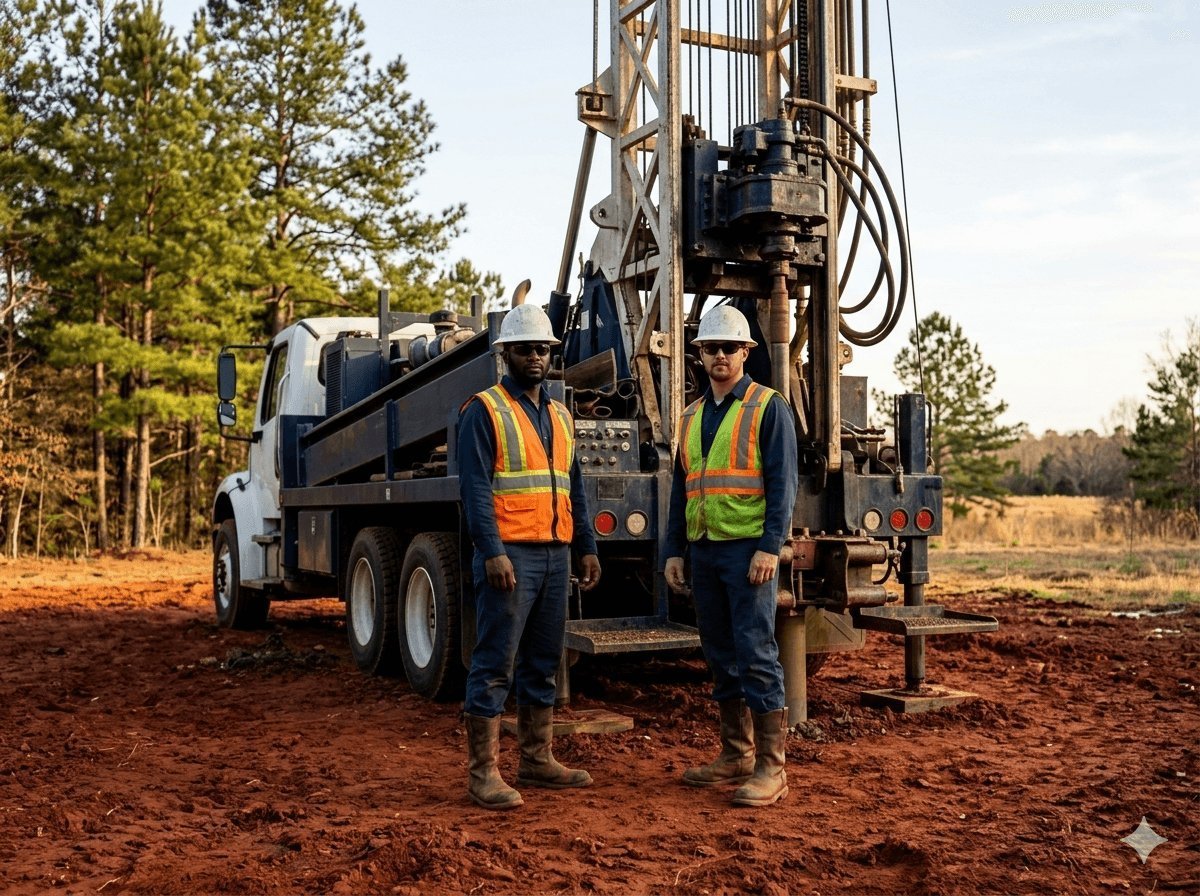
Drilling rig on a rural Burke County property for new residential well installation

New Well Drilling

Residential water well installation for Burke County homes and rural properties. Wells in this part of middle Georgia typically reach the Floridan aquifer at depths of 80–200 feet through dense red clay upper soil layers. A Georgia EPD permit is required and is handled as part of every well drilling installation.

Learn more
Submersible well pump being serviced for Burke County homeowner

Well Pump Repair & Replacement

Diagnosis and repair of submersible pump systems when pressure drops, water cuts out, or the pump runs but delivers nothing. Georgia's summer heat puts heavy demand on well motors — most pump replacements are completed in a single visit to minimize time without water.

Learn more
Pressure tank and pump system service in Waynesboro GA

Pressure Tank Service

A waterlogged pressure tank causes the pump to short-cycle — turning on and off rapidly, which accelerates motor wear and risks premature pump failure. Diagnosis covers the tank, pressure switch, and gauge to identify whether the tank needs recharging or full replacement.

Learn more
Well inspection for pre-purchase property evaluation in Burke County

Well Inspection

Pre-purchase well inspections for Burke County rural properties, including yield testing, casing integrity review, and written documentation of condition, depth, and water output. Most mortgage lenders require a well inspection report before financing a property with a private water supply.

Learn more
Water quality testing for private well in Waynesboro Georgia

Water Testing

Laboratory analysis of well water for bacteria and coliform, iron, manganese, nitrates, hardness, and pH. The Georgia Department of Public Health recommends annual testing for all private wells — particularly after flooding, which can introduce contaminants through well casing seals.

Learn more
Water treatment system installation for Burke County well water

Water Treatment

Installation of whole-home filtration, iron filters, water softeners, and UV disinfection systems selected based on actual laboratory water test results — not generic guesswork. Burke County well water often carries elevated iron or hardness that benefits significantly from targeted treatment.

Learn more

What Burke County Property Owners Ask About Well Drilling

How much does well drilling cost in Waynesboro, Burke County, GA?

Residential well drilling in the Waynesboro area typically ranges from $5,000 to $12,000 or more, depending on depth, soil conditions, and the pump system installed. Burke County's dense red clay upper soil layer often requires drilling through 40 to 80 feet of clay before reaching the Upper Floridan aquifer at typical residential depths of 80 to 200 feet. A site evaluation is the only way to get an accurate estimate for your specific property.

How deep do wells go in Burke County, Georgia?

Most residential water wells in Burke County reach 80 to 200 feet deep to access the Upper Floridan aquifer, one of the most productive groundwater systems in the southeastern United States. The dense red clay that characterizes Burke County's upper soil profile means wells in this region typically require more drilling depth than shallower surficial aquifers provide. Actual depth varies by property, so a site-specific evaluation is the most reliable way to estimate your well's target depth before drilling begins.

Do I need a permit to drill a well in Burke County, GA?

Yes. The Georgia Environmental Protection Division requires a permit before any new water well is drilled in the state, and Burke County properties are subject to Georgia's Water Well Standards Act. The permit ensures your well meets construction standards for casing depth, grouting, and setback distances from contamination sources — all designed to protect the aquifer and your drinking water. Your drilling contractor handles the permit application as part of the installation process.

Why Burke County Homeowners Choose Local

Based in Burke County

Unlike large regional well drilling operations that dispatch crews from hours away, Waynesboro Well Drilling serves this community directly — no long scheduling waits, no out-of-area crews unfamiliar with local geology. When your water is out, local response time matters.

Georgia EPD Compliant

Every new well is drilled to Georgia Environmental Protection Division permit standards — sited correctly, cased to the proper depth, and documented for the county record. Compliance isn't optional; it protects your property value and your neighbors' water supply.

Upfront, Honest Pricing

You receive a clear quote before any work begins. Well drilling depth in Burke County varies by property — the red clay upper soil and varying aquifer layers mean pricing is property-specific. We assess first, quote honestly, then proceed only with your approval.

Emergency Service Available

A well pump failure during a Georgia summer is not something that can wait until Monday. Submit a service request at any hour and we'll connect you with a technician. Most pump service calls in the Waynesboro area can be scheduled and completed quickly.

Well Drilling in Burke County — What You Need to Know

Burke County's soil profile and geology create specific conditions that affect every well installation and well drilling outcome. Understanding them is the difference between a well that performs for 30 years and one that underdelivers from day one.

Waynesboro Well Drilling crew at a Burke County job site

Burke County Well Conditions

1

Dense red clay upper profile. Burke County's upper soil is heavy red clay — one of the defining characteristics of middle Georgia's geology. This clay resists the drill and requires professional rotary well drilling equipment. Homeowner-attempted shallow wells rarely reach reliable water here, and those that do often fail within a season.

2

Well drilling depths reach 80–200 feet in most of the county. The Floridan aquifer system underlies Burke County, and residential well drilling typically reaches the aquifer at 80 to 200 feet depending on local geology. Depth varies by property — a site evaluation gives an accurate estimate before any drilling begins.

3

Drought cycles make private wells a genuine advantage. Georgia experiences periodic drought conditions that trigger municipal water restrictions. Private well owners in Burke County draw from their own aquifer supply — not subject to county restrictions or surcharges during dry periods when well drilling access matters most.

Signs Your Well Needs Attention

  • Low or fluctuating water pressure — often a pressure tank or pump issue, but can indicate a depleting water table during drought

  • Air spurting from faucets — air in the lines signals a pump drawing air, often meaning the water level has dropped or the pump is failing

  • Orange, brown, or cloudy water — elevated iron or sediment; treatable but requires water testing first to identify the specific cause

  • Pump running continuously or short-cycling — a waterlogged pressure tank is the usual cause; if ignored, it burns out the pump motor

  • No water after a power surge or storm — summer thunderstorms in Burke County are a common cause of pump electrical failures; often repairable in a single service visit

Serving Burke County and Surrounding Communities for Well Drilling

Waynesboro Well Drilling covers all of Burke County, Georgia — from the county seat in Waynesboro to rural communities throughout the region. If you're in Burke County and need well drilling or well service, we cover your area.

Waynesboro Midville Sardis Girard Keysville Perkins Vidette

Not sure if we cover your property? Submit a quote request and we'll confirm your service area.

How Our Well Drilling Process Works in Waynesboro and Burke County

From permit to final pump test, we handle every well drilling step so your property gets a reliable water supply built to Georgia standards.

1

Site Review & Quote

We review your property access, soil conditions, and water needs, then provide a clear quote based on expected depth and system requirements. Burke County well drilling projects often reach 80–200 feet depending on local geology.

2

EPD Permit & Drilling

We handle the Georgia EPD permit and drill to the appropriate aquifer layer for your lot. Our well drilling rotary equipment is built for dense red clay, ensuring proper casing and seal depth for long-term performance.

3

Pump, Pressure, & Test

We install the pump and pressure system, verify flow rate and pressure, and can run water testing on request. You receive a fully operational well drilling system with documentation for your records.

Well Drilling Cost in Waynesboro and Burke County, GA

The cost to drill a new residential well in Burke County, Georgia typically ranges from $5,000 to $12,000 installed, including drilling, casing, pump, pressure tank, and the required Georgia EPD well permit. Repair and service costs vary by job — the ranges below reflect typical Burke County market rates.

New residential well

$5,000 to $12,000+

Includes well drilling, casing, pump, pressure tank, and EPD permit. Final cost depends on the depth required and soil conditions at your specific property.

Well pump replacement

$800 to $2,500

Submersible pump replacement cost depends on pump depth and motor size. Most replacements are completed in a single service visit.

Pressure tank replacement

$300 to $800 installed

Addressing a failing pressure tank early prevents short-cycle damage that wears out the pump motor prematurely.

Well inspection & water testing

$150 to $400

Includes yield testing and written documentation. Water quality lab testing can be added when required by lenders or requested by buyers.

Actual costs vary by property depth, soil conditions, and system specifications. Request a free quote for an accurate estimate on your Burke County property.

Well Drilling FAQs — Burke County, GA

Clear answers to the most common well drilling questions in Waynesboro and across Burke County.

How deep does a well need to be in Burke County, GA for well drilling?

Residential water wells in Burke County for well drilling typically range from 80 to 200 feet deep, depending on local geology and the depth of the aquifer layer at your specific property. Burke County sits in middle Georgia where the upper soil profile is dense red clay, and wells often need to reach the Floridan aquifer system to access a reliable, clean water supply. A site evaluation is the best way to estimate depth before drilling begins.

How much does it cost to drill a well in Waynesboro, GA for well drilling?

Well drilling costs in the Waynesboro area typically range from $5,000 to $12,000 or more, depending on the depth required, soil conditions, and the pump and pressure system installed. Burke County's red clay soil and varying aquifer depths mean well drilling costs vary from property to property — there is no reliable flat-rate estimate without a site assessment. A free quote is the only way to get an accurate number for your specific lot.

Do I need a permit to drill a well in Georgia for well drilling?

Yes. The Georgia Environmental Protection Division (EPD) requires a permit before any new water well drilling is started in the state. The permit ensures the well is sited correctly, drilled to the proper depth and construction standards, and does not interfere with neighboring water sources. Your drilling contractor handles the permit application as part of the installation process — you do not apply separately.

How long does it take to drill a well with well drilling service?

Well drilling for a residential water well typically takes one to two days on-site, depending on depth and the soil conditions encountered. The full process — from permit approval to a finished, operational well with pump and pressure system — generally takes one to two weeks when factoring in EPD permit processing time. Pump repair and pressure tank service, by contrast, can usually be completed in a single visit.

Is well water safe to drink in Waynesboro, GA after well drilling?

Private well water in Burke County is generally safe when well drilling is properly completed and the well is tested regularly. The Georgia Department of Public Health recommends annual water testing for all private wells, including tests for bacteria and coliform, nitrates, iron, and pH. Water quality can change after heavy rain or flooding events, which are not uncommon in this region — annual testing is the only reliable way to confirm your water remains safe.

Why is my well water discolored?

Discolored or odorous well water in Burke County after well drilling is most commonly caused by elevated iron or manganese levels, which give water an orange or brown tint and a metallic taste. A sulfur or rotten-egg smell typically indicates hydrogen sulfide gas — common in wells that draw from deeper rock formations. Both issues are treatable with the right filtration system, but a water test should be run first to identify the exact cause and the correct treatment approach.

What causes a well pump to stop working?

The most common causes of well pump failure after well drilling in middle Georgia are age, heat stress, and electrical surges. Submersible pumps in Burke County often run continuously during Georgia's long hot summers, which accelerates wear on the motor windings. Power surges from summer thunderstorms are another frequent culprit — a surge protector on the pump circuit can help extend pump life. A failed pressure switch or a waterlogged pressure tank can also mimic pump failure by causing the system to cycle constantly or lose pressure.

Should I repair or replace my well pump?

Whether to repair or replace after well drilling depends on the pump's age, the extent of the damage, and the cost comparison. Submersible pumps typically last 10 to 15 years under normal conditions — if your pump is approaching that range and has failed, replacement is usually the better long-term investment. A younger pump with a specific component failure (pressure switch, capacitor, wiring) is often worth repairing. A service visit to diagnose the problem will give you a clear answer and an honest cost comparison between the two options.

What aquifer do wells tap in Georgia for well drilling?

Most residential well drilling in Burke County, Georgia taps into the Upper Floridan aquifer, a major limestone aquifer system that underlies much of the southeastern United States. In middle Georgia the Upper Floridan aquifer is one of the most productive groundwater sources in the region, supplying reliable yields for residential, agricultural, and municipal use. Depending on the specific location in Burke County, wells may also draw from shallower surficial aquifers, though the Upper Floridan aquifer is typically the target for depth and consistency.

How deep is the water table in middle Georgia for well drilling?

In middle Georgia and Burke County specifically, the shallow water table can be found at relatively modest depths, but it is not a reliable drinking water source due to susceptibility to surface contamination. Residential well drilling is typically completed to 80 to 200 feet to reach the Upper Floridan aquifer, which provides a deeper, more protected groundwater supply. Exact depth varies by property — dense red clay in Burke County can require drilling through 40 to 80 feet of upper soil before reaching the aquifer formation.

What are the setback requirements for wells in Georgia well drilling?

Georgia law requires minimum setback distances between a new water well and potential contamination sources on the same or neighboring property for compliant well drilling. Under Georgia's Water Well Standards Act, a well must typically be located at least 50 feet from a septic tank, 100 feet from a septic drain field, and appropriate distances from fuel storage, livestock operations, and property lines — exact requirements depend on the type of well and the nearby source. Your drilling contractor reviews setback requirements as part of site planning and permit submission to Georgia EPD.

What is the Georgia Water Well Standards Act for well drilling?

The Georgia Water Well Standards Act is the state law that governs well drilling construction, repair, and abandonment of water wells throughout Georgia, including Burke County. It establishes minimum construction standards for casing depth, grouting, wellhead seals, and setback distances — all designed to protect the aquifer from contamination and ensure long-term water quality. The Act also requires that any person drilling or constructing a water well in Georgia be licensed by the state. Permits are administered by the Georgia Environmental Protection Division (EPD).

How do I verify a licensed well driller in Georgia for well drilling?

Georgia requires all water well drilling contractors to hold a valid license issued by the Georgia Secretary of State. You can verify a driller's license status through the Georgia Secretary of State's online license lookup tool or by contacting the Georgia EPD directly. A licensed contractor will also be able to pull the required EPD well permit before drilling begins — if a driller cannot provide or obtain a permit, that is a clear warning sign. Always confirm licensure before signing a well drilling contract in Burke County or anywhere in Georgia.

How does well drilling work?

Well drilling in Burke County begins with a site review to confirm access, setback requirements, and estimated depth — followed by a Georgia EPD permit application before any equipment is mobilized. Once the permit is approved, a rotary drilling rig bores through the upper red clay profile and into the Floridan aquifer. Steel or PVC casing is installed as drilling progresses, then grouted to seal the annular space against surface water intrusion. After the borehole reaches the target aquifer depth and confirms adequate yield, a submersible pump, pressure tank, and controls are installed and the system is flow tested before being handed over as a completed, operational water supply.

What do I do if my well stops working after well drilling?

If your well has suddenly stopped producing water in Waynesboro, Georgia after well drilling, the most common causes are a failed well pump, a tripped breaker, a waterlogged pressure tank, or a well that has run dry — all of which require a licensed well service technician to diagnose and repair. Start by checking the breaker at your electrical panel and the pressure switch near the tank before calling for service. Do not attempt to pull a submersible pump without proper equipment — the wiring and weight involved make DIY pump extraction genuinely dangerous. Submit a service request so a technician can confirm the cause and give you a clear repair plan before any work begins.

Can a well run dry after well drilling?

Yes — a well can run dry after well drilling, though it is more accurate to say the pump has outpaced the aquifer's recharge rate rather than that the underground water is permanently gone. In Burke County this most commonly occurs during extended drought periods when the water table drops and shallow wells lose yield. Wells drawing from the deeper Upper Floridan aquifer are significantly more drought-resistant than surface-fed shallow wells. If your well is producing air or dramatically reduced flow during a dry stretch, a service call can confirm whether the issue is aquifer yield, a pump positioned too high in the casing, or a component failure that mimics low yield.

Is it legal to drill your own well in Georgia for well drilling?

Under the Georgia Water Well Standards Act, any person constructing, repairing, or abandoning a water well in Georgia must hold a valid state well driller's license issued by the Georgia Secretary of State — meaning unlicensed homeowner well drilling is prohibited for wells intended as a water supply. The law exists to protect both the property owner and the surrounding groundwater by ensuring wells are cased, grouted, and sited to state standards. A Georgia EPD well permit is also required before drilling begins. Hiring a licensed contractor is the only legal and practical path to a compliant, operational water well in Burke County.

Do you drill irrigation or specialty wells in Burke County well drilling?

Yes. In addition to residential water wells, we provide irrigation well drilling for agricultural use, pasture watering, and large-lot irrigation needs in Burke County, Georgia. We also handle well installations for outbuildings, livestock operations, and rural properties that need a separate water source from the household well. Contact us to discuss the depth, yield, and pump requirements for your specific application.

Requests are reviewed promptly — we follow up as quickly as possible

Request a Free Well Quote

Tell us about your property and water needs. We'll review your request and follow up with the next steps for a detailed quote.

Waynesboro Well Drilling Service Area in Burke County

We cover the entire Burke County region with responsive scheduling for rural properties and in-town homes that need well drilling support.